Casa Cenote (Cenote Manatí), Tulum: What to Know Before You Go
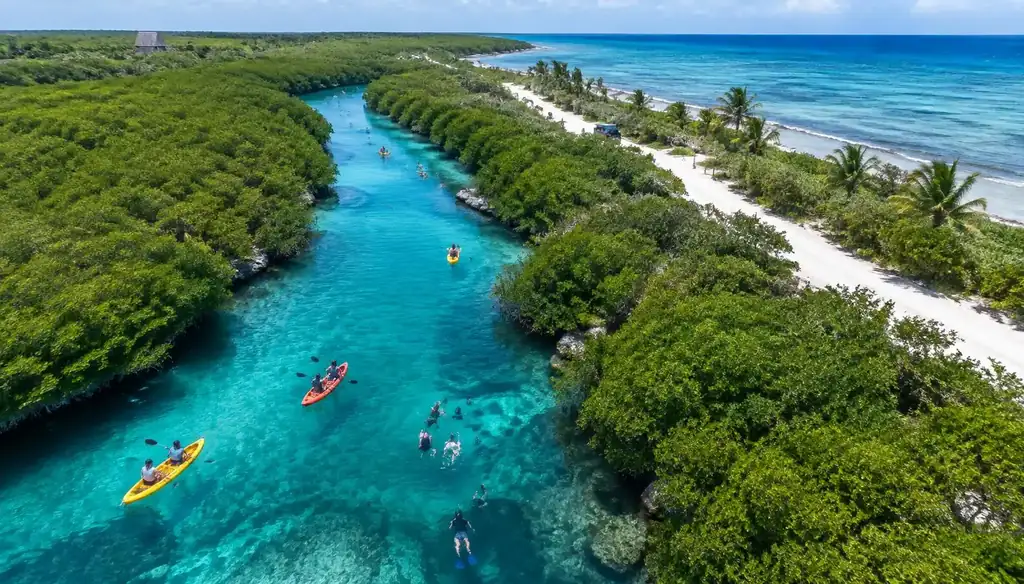
Casa Cenote is a long, open cenote in the mangroves of Tankah Bay, about 15 minutes north of Tulum. It joins the sea through an underwater tunnel, so you swim and snorkel where fresh water meets salt water, with fish, blue crabs and a famous small crocodile.
Illustrative image. Last checked: October 2026.
Casa Cenote quick facts
- Also called
- Cenote Manatí
- Location
- Tankah Bay, about 10–12 km north of Tulum, on the beach side of Highway 307
- Entry fee
- About 500 MXN per adult, life jacket included (visitor reports, mid-2026)
- Hours
- About 9:00 am – 5:00 pm daily (confirm locally)
- Depth
- Mostly shallow; deepest points about 7–10 m
- Crocodile
- Yes, one small resident crocodile is often seen
- Time needed
- About 2–3 hours
- Payment
- Bring cash pesos
Fees and hours come from recent visitor reports and travel guides, not an official price list. They change often, so check at the entrance.
What Is Casa Cenote (Cenote Manatí)?
Casa Cenote is an open, river-like cenote on the Caribbean coast at Tankah Bay, north of Tulum. Locals also call it Cenote Manatí, because manatees once swam in from the sea. It winds for a few hundred metres through mangroves and is shallow enough in many spots to see the bottom clearly.
Unlike cave cenotes such as Dos Ojos with its caverns, Casa Cenote sits fully under the open sky. That makes the swim feel more like a calm jungle lagoon than a dark pool.
Casa Cenote vs the Casa Cenote Hotel
The name confuses many visitors. Casa Cenote Hotel and its restaurant sit across the dirt road, on the beach. The cenote itself is the public swimming spot on the other side, with its own ticket booth. You do not need to stay at the hotel to swim in the cenote.
Why the Water Looks Blurry: Fresh Meets Salt
Casa Cenote is linked to the sea by a tunnel of roughly 50 m. Fresh groundwater flows out while salt water pushes in. Where the two layers meet, the water shimmers and looks blurry for a moment. This is called a halocline, and it is normal. Mornings, before many swimmers kick up sand, usually give the clearest view.
Where Is Casa Cenote?
Casa Cenote is in Tankah Bay, about 10–12 km north of Tulum town and roughly 56 km south of Playa del Carmen. The entrance is on the beach side of Highway 307, down a short dirt road. Akumal is about 15 minutes further north, which makes the two easy to pair.
How to Get to Casa Cenote from Tulum
From Tulum, Casa Cenote is about a 15–20 minute drive north on Highway 307. Car and taxi are the easiest options. A colectivo is the cheapest, but it drops you on the highway, so you walk the last part.
By Car
Drive north on Highway 307 towards Playa del Carmen and look for the Tankah Bay / Casa Cenote sign on the right. Turn off and follow the dirt road towards the sea. There is parking near the entrance.
By Colectivo
Shared vans run along Highway 307 between Tulum and Playa del Carmen all day. Ask the driver to stop at Casa Cenote or Tankah. Older guides list the Tulum fare at about 20–40 MXN. From the highway it is a walk of around 1.5 km in the sun, so bring water.
By Taxi
A taxi from Tulum town costs more than a colectivo but drops you at the entrance. Agree the price before you get in. There are few taxis waiting at Tankah, so ask your driver to come back at a set time or check how you will return.
Casa Cenote Price, Rentals and Hours
Casa Cenote costs about 500 MXN per adult, life jacket included, according to visitor reports from mid-2026. Rentals cost extra. The cenote is usually open from about 9:00 am to 5:00 pm every day. Pay in cash pesos and confirm the price at the gate.
Entrance Fee and What It Includes
Casa Cenote used to be one of the cheapest cenotes near Tulum, at around 150–250 MXN. A guide updated in June 2026 reports that the fee rose to about 500 MXN. Some listings quote even higher package prices that include gear. The ticket normally includes a life jacket and use of the basic facilities.
Kayak, Paddleboard and Snorkel Gear Rental
- Kayak and paddleboard rentals are available on site. Older guides list a kayak at around 300 MXN and a paddleboard at around 700 MXN.
- Snorkel gear rental is reported at around 20 USD, so bring your own mask and snorkel to save money.
- Guided snorkel tours are offered at the entrance. Some visitors feel they are poor value, because the channel is easy to explore alone.
Opening Hours and How Much Time You Need
Plan about 2–3 hours at Casa Cenote: one hour to swim and snorkel, plus time to kayak or paddleboard. Add another hour if you want to cross the road and swim at the beach.
Things to Do at Casa Cenote
Casa Cenote is a place to float, snorkel and paddle at a slow pace. There are no cliff jumps or dark caves, so it suits mixed groups and nervous swimmers.
Swimming and Snorkeling in the Mangroves
Snorkel along the edges, where mangrove roots hang into the water. Look for small fish, blue crabs and sometimes saltwater species that swim in from the sea. Move slowly, do not touch the roots and keep your fins off the bottom.
Kayak and Paddleboard
The long, calm channel is great for kayaking and paddleboarding. Paddling lets you see the full winding shape of the cenote and reach quieter corners away from the swimming area.
Is There a Crocodile in Casa Cenote?
Yes. A small crocodile, nicknamed Pancho or Panchito, lives in Casa Cenote and is often seen resting near the mangroves. Visitor reports describe him as shy, keeping to his own area away from swimmers. Many people swim there every day without problems.
Still, treat him as a wild animal. Keep your distance, never feed or touch him, and swim only in the areas staff show you. If you feel uneasy, stay near the main deck or choose a kayak instead of swimming.
Casa Cenote Depth and Diving
Most of Casa Cenote is shallow, often 1–4 m. Dive centres list the deepest points at about 7–10 m. That makes Casa Cenote one of the easiest cenote dives in the area and a common choice for first-time divers and Discover Scuba programmes.
Divers swim along the mangroves and towards the tunnel that leads to the sea. Diving here must be done with a licensed local dive centre. Snorkelers and swimmers stay in the open water.
Is Casa Cenote Worth It? Pros, Cons and Who It Suits
Casa Cenote is worth it if you want an easy, open-air snorkel in the mangroves, with kayak and paddleboard options and the beach right across the road. Skip it if you want crystal-clear cave water, light beams or the lowest price.
- Pros: open sky, calm water, mangroves and fish, kayak and SUP, beach nearby, good for beginner divers and families.
- Cons: price has gone up, it can get busy at weekends, water can look blurry, and rentals are expensive.
- Best for: families, relaxed snorkelers, kayakers and new divers.
- Less ideal for: anyone who wants deep jumps, caves or a very cheap swim.
Still deciding? Compare it with other options in our guide to the best cenotes in Tulum.
Rules and What to Bring to Casa Cenote
- Shower before you swim. No sunscreen, lotion or bug spray in the water; put it on after you swim.
- Wear the life jacket if staff ask you to, and stay in the marked areas.
- Do not touch the mangroves, crabs or crocodile, and do not feed any animals.
- Bring cash pesos, a towel, your own snorkel gear, water shoes and drinking water.
- A dry bag or waterproof phone case helps. Lockers are reported on site.
Half-Day Plan: Casa Cenote and Nearby Stops
- Leave Tulum around 8:30 am and arrive at Casa Cenote at opening.
- Swim and snorkel the channel first, while the water is calm and clear.
- Rent a kayak or paddleboard if you want to see the full length of the cenote.
- Cross the road for a short swim or lunch at Tankah beach.
- Drive about 15 minutes north to Akumal Bay for sea turtles, or head back to Tulum.
Would you rather not handle transport? Our Tulum ruins and cenote tour with pickup covers the ruins and a swim at Gran Cenote. It does not stop at Casa Cenote, but it is an easy way to see a cenote and the ruins in one day.
Casa Cenote FAQ
How much is Casa Cenote?+
Recent visitor reports from mid-2026 put the Casa Cenote entrance fee at about 500 MXN per adult, with a life jacket included. Older guides list 150–250 MXN, so prices have gone up. Kayak, paddleboard and snorkel gear cost extra. Bring cash pesos and confirm the price at the gate.
Is Casa Cenote good for kids?+
Yes, for most families. Casa Cenote is open, calm and has no cave section, and a life jacket comes with the ticket. The water is deeper than standing height in many parts, so small children should wear the life jacket the whole time and stay close to an adult.
Can you swim at Casa Cenote without a life jacket?+
Rules change, but life jackets are included with entry and staff often ask visitors to wear one, especially weak swimmers. Strong swimmers may be allowed without one in some areas. Ask at the entrance and follow what the staff tell you on the day.
What is the best time to visit Casa Cenote?+
Go at opening, around 9:00 am, or later in the afternoon. Mornings are calmer and the water looks clearer before many swimmers stir up the sand. Weekends and Mexican holidays are the busiest days. Sunny days give the best light and colour.
Is Casa Cenote part of a tour from Tulum?+
Some third-party snorkel and dive trips stop at Casa Cenote. Our own Tulum ruins and cenote tour visits Gran Cenote, not Casa Cenote. If you want Casa Cenote, the easiest way is by car, taxi or colectivo from Tulum.
Can you bring a camera or drone?+
Phones and small action cameras are usually fine. Some visitors report an extra fee for professional cameras or filming, and drones normally need permission. Ask at the entrance before you fly or film anything.
Want the Tulum ruins and a Gran Cenote swim in one day with pickup? Ask us on WhatsApp.
Ask on WhatsAppMore Cenotes Near Tulum
Compare Casa Cenote with Cenote Dos Ojos and Gran Cenote, or read the full best cenotes in Tulum list. Turtles at Akumal are nearby.
Our Tulum ruins and cenote tour visits Gran Cenote, not Casa Cenote.