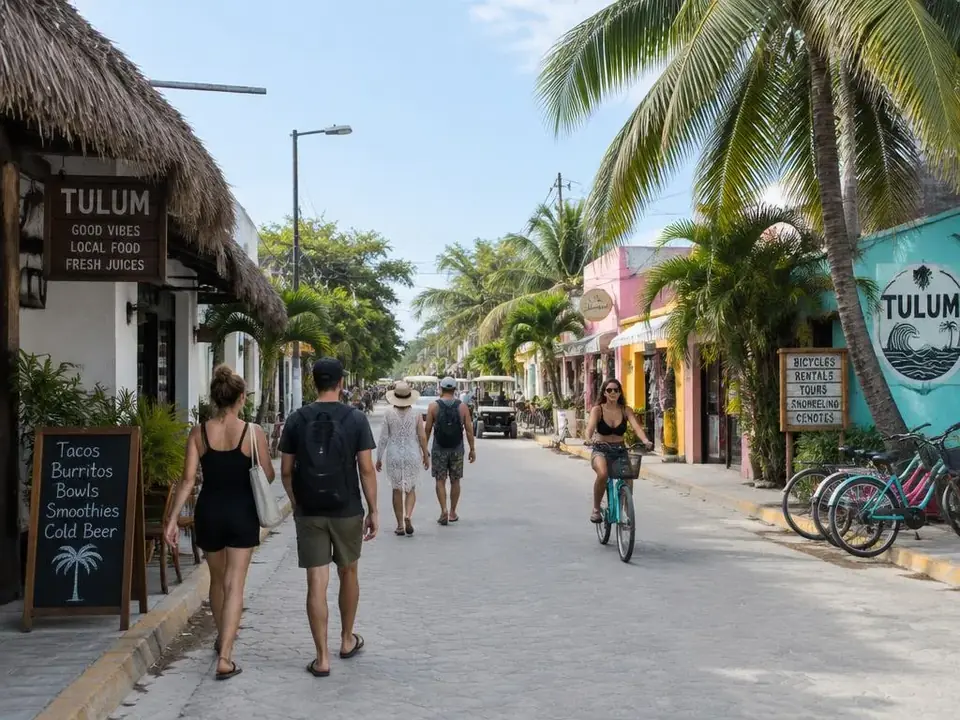
Is Tulum Safe? An Honest Answer for Tourists (2026)
Official advice checked 3 October 2026 · Illustrative image
Yes, Tulum is generally safe for tourists who take normal big-city precautions. Millions of people visit every year without trouble. Most crime linked to cartels targets rival groups, not visitors, but bystanders have been hurt, so the US government asks travelers to Quintana Roo, the state Tulum is in, to "exercise increased caution."
This guide explains what that means in practice: the official US and Canada advice, the real risks (mostly petty theft, scams and the sea), how to get around, and what to do if something goes wrong. We do not claim personal stories here; facts come from official sources and are dated.
| Quick answer | Tulum safety (Oct 2026) |
|---|---|
| US advice for Quintana Roo | Level 2: Exercise increased caution (Mexico advisory dated 29 May 2026) |
| Biggest tourist risks | Petty theft, taxi overcharging, scams, strong sea currents, heat |
| Cartel violence | Exists, mostly between criminal groups; rare for tourists |
| After dark | Stay alert in downtown and on quiet stretches of the beach road |
| Emergency number | 911 |
Is Tulum Safe Right Now? The Short Answer
Right now, in late 2026, Tulum is open and busy, and most visits are trouble-free. Is Tulum Mexico safe enough to book? For most travelers, yes, if you avoid buying drugs, keep valuables out of sight and use known transport at night. The risk is real but similar to many popular resort towns.
What Has Changed in Tulum Recently
Tulum grew very fast, and with it came more nightlife, more traffic and some organised crime around the drug trade. In February 2026 security operations in Mexico led to short-lived violence in several states; the US Embassy later said it had ended but that risks remain. Tulum also has more police and National Guard patrols in tourist areas than a few years ago. Check the latest advisory a week before you travel.
Tulum Travel Advisory: What the US and Canada Say
The US State Department rates Mexico by state. Quintana Roo, which includes Tulum, Cancun, Playa del Carmen and Cozumel, is at Level 2, "exercise increased caution," due to crime and terrorism risk. It specifically asks visitors to pay attention after dark in downtown Tulum. It is not on the "reconsider" or "do not travel" lists.
Canada's government advises a high degree of caution in Mexico overall because of crime levels, with similar guidance for the Riviera Maya. Both advisories change, so always read the source yourself:
US citizens can join the free STEP program for alerts. The US advice also suggests the Quintana Roo state "Guest Assist" app, which lists emergency numbers and helps with police reports.
Is Tulum Safe From Cartels? Violent Crime vs Tourist Risk
Cartels and gangs do operate in Quintana Roo, mainly over local drug sales. Most shootings are between these groups. Tourists are rarely targeted, but the US advisory notes that innocent bystanders have been injured, including in tourist areas.
The simple way to stay far from this risk:
- Never buy or use drugs. Drug sales are what links visitors to criminal groups.
- Leave a bar or party if the mood turns tense or a fight starts.
- Avoid isolated places late at night, especially after the main venues close.
- Don't resist if someone demands money or a phone; items can be replaced.
Real Risks Tourists Face in Tulum: Petty Theft and Scams
For most visitors, the realistic problems are smaller: a phone taken from a beach towel, a bike stolen without a lock, or paying too much for a taxi. These are easy to prevent.
Common Tulum Scams to Watch For
- Taxi overcharging: no meters; agree the price before you get in.
- Card skimming: use ATMs inside banks or shops, and watch your card at payment.
- Gas station tricks: check the pump starts at zero and count your change.
- Fake "parking fees" or beach access fees: ask for an official ticket.
- Street tour sellers: book directly with a company you can contact later.
Tulum Safety by Situation
| Situation | Risk level | What to do |
|---|---|---|
| Daytime in town and at the ruins | Low | Normal care with bags and phones |
| Beach in daytime | Low (theft) / varies (sea) | Don't leave items alone; check flags |
| Bars and parties late at night | Medium | Watch your drink, go home in a known taxi |
| Driving after dark | Medium | Avoid; roads are dark with speed bumps (topes) |
| Buying drugs | High | Don't |
Taxi and Transport Safety in Tulum
Are Taxis in Tulum Safe?
Licensed Tulum taxis are generally safe, but they are known for high and unmetered prices. Agree the fare first, in pesos, and ask your hotel what the normal price is. Colectivo vans on Highway 307 are cheap and fine in daytime. For costs and routes, see our guide to getting around Tulum.
Renting a Car or Scooter in Tulum
Driving in daytime is manageable. Watch for speed bumps, cyclists and police checkpoints, and carry your licence and rental papers. Scooters and bikes are popular but crashes are common on the busy beach road; wear a helmet and avoid riding at night.
Organised Tours With Hotel Pickup
If you don't want to drive, a tour with pickup removes the transport question. Our Tulum ruins tour with hotel pickup collects you from Tulum, Playa del Carmen, Cancun and other nearby areas with a set time and price.
Is Tulum Safe at Night? Town, Beach Road and Where You Stay
Tulum is livelier at night than it is dangerous, but this is when most problems happen. Stay on busy streets in town, take a taxi rather than walking long dark stretches of the beach road, and keep an eye on your drink in clubs. If you are still choosing an area, our guide to where to stay in Tulum compares town and beach.
Water Safety in Tulum: Sea Currents and Cenotes
The sea is often a bigger danger than crime. Rip currents can be strong, many beaches have no lifeguards, and red flags mean no swimming. In cenotes, water is deep and cold; wear a life jacket if you are not a strong swimmer. See our Tulum beach guide for beach conditions and seaweed season.
Health in Tulum: Tap Water, Sun and Heat
Don't drink tap water in Tulum; use bottled or filtered water, which most hotels provide. Ice in restaurants is normally made from purified water. The sun is strong all year, so use reef-safe sunscreen, a hat and plenty of water, especially at the ruins where there is little shade. Use insect repellent at dusk.
Is Tulum Safe for Solo and Female Travelers?
Many solo and female travelers visit Tulum each year. The usual advice applies: share your plans with someone, don't walk alone on dark roads, watch your drink, and use transport arranged by your hotel late at night. Group tours and well-reviewed hostels are easy ways to meet people.
Emergency Numbers in Tulum
| Service | Contact |
|---|---|
| Police, ambulance, fire | 911 (free from any phone) |
| Anonymous crime tip line | 089 |
| US Consular Agency, Playa del Carmen | Plaza Progreso, Local 33, Carretera Federal, Playa del Carmen |
| Canadian citizens abroad | Emergency Watch and Response Centre via travel.gc.ca |
Keep a photo of your passport on your phone and your hotel address written down.
So, Is Tulum Safe to Visit? Our Verdict
Is it safe to travel to Tulum? For most visitors, yes. The official advice is "increased caution," not "avoid." Stay away from drugs, be careful after dark, respect the sea, and use known transport. With those habits, your biggest worries will be sunburn and taxi prices. Ready to plan your days? Read our things to do in Tulum guide.
Is Tulum Safe? Frequently Asked Questions
Is Tulum safe for families with kids?
+
Yes, most families visit Tulum without problems. The main risks for kids are sun, heat, sea currents and deep cenote water, not crime. Use life jackets in cenotes, swim only where the sea is calm, and plan daytime activities like the ruins early in the morning.
Is Tulum safe if you're pregnant?
+
Crime risk is the same as for any visitor, but heat and mosquitoes matter more. The CDC lists Mexico as an area with past Zika risk, so check the current CDC advice and talk to your doctor before you book. Drink bottled water and avoid long hours in strong sun.
Do I need travel insurance for Tulum?
+
Travel insurance is strongly recommended. Private hospitals in the Riviera Maya usually ask for payment or proof of insurance before treatment, and US health plans often do not cover care in Mexico. Choose a policy that includes medical evacuation.
Are Tulum tours safe?
+
Tours run by licensed operators are one of the safer ways to see the area, because you have a set pickup, a known driver and a guide. Check that the company gives a clear price, a pickup time and a way to contact them before you pay.
More Tulum Planning
Pick a well-lit, walkable base with where to stay in Tulum, and read Tulum nightlife for getting home late. Hurricane season matters too; see the best time to visit Tulum.
Prefer licensed transport and a guide? Our Tulum ruins tour includes hotel pickup.